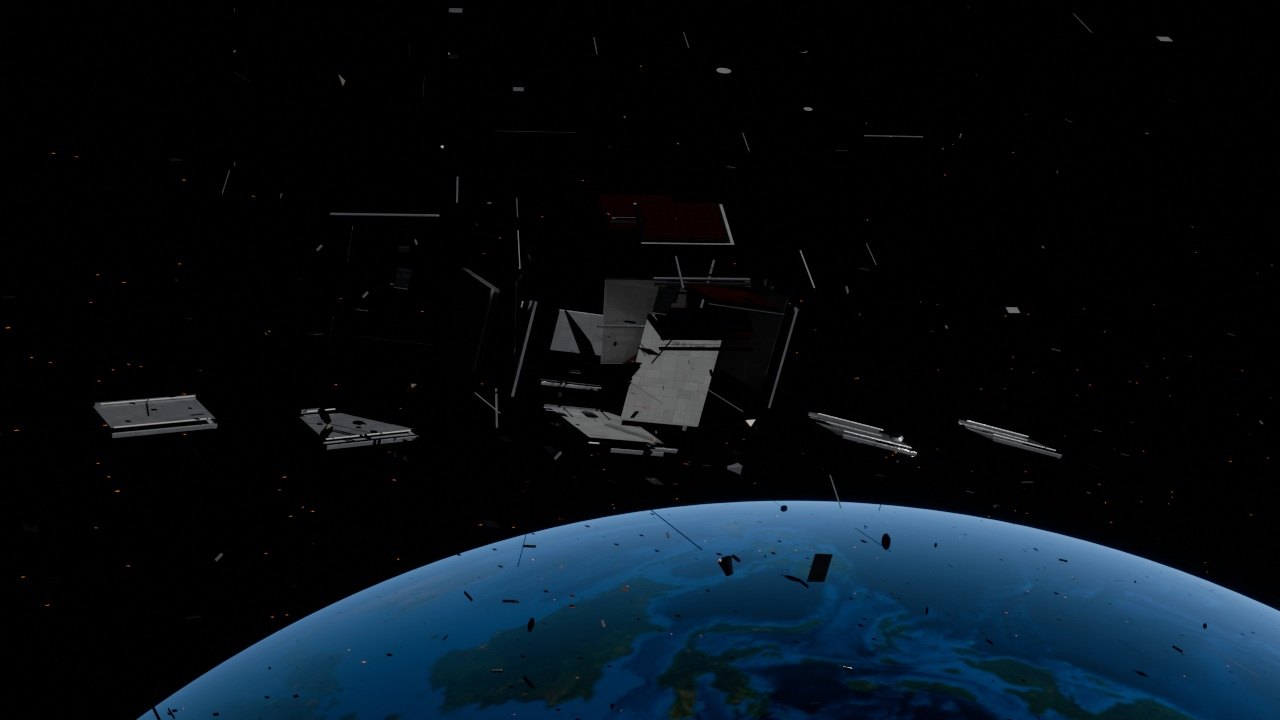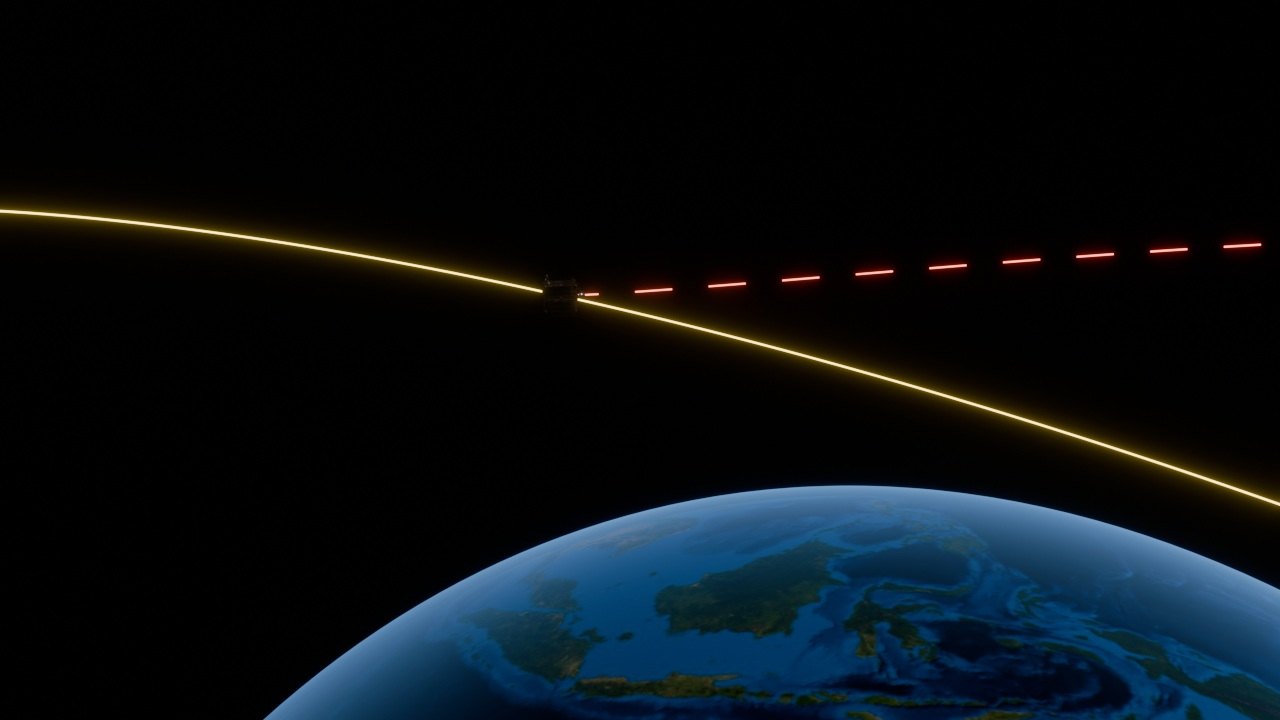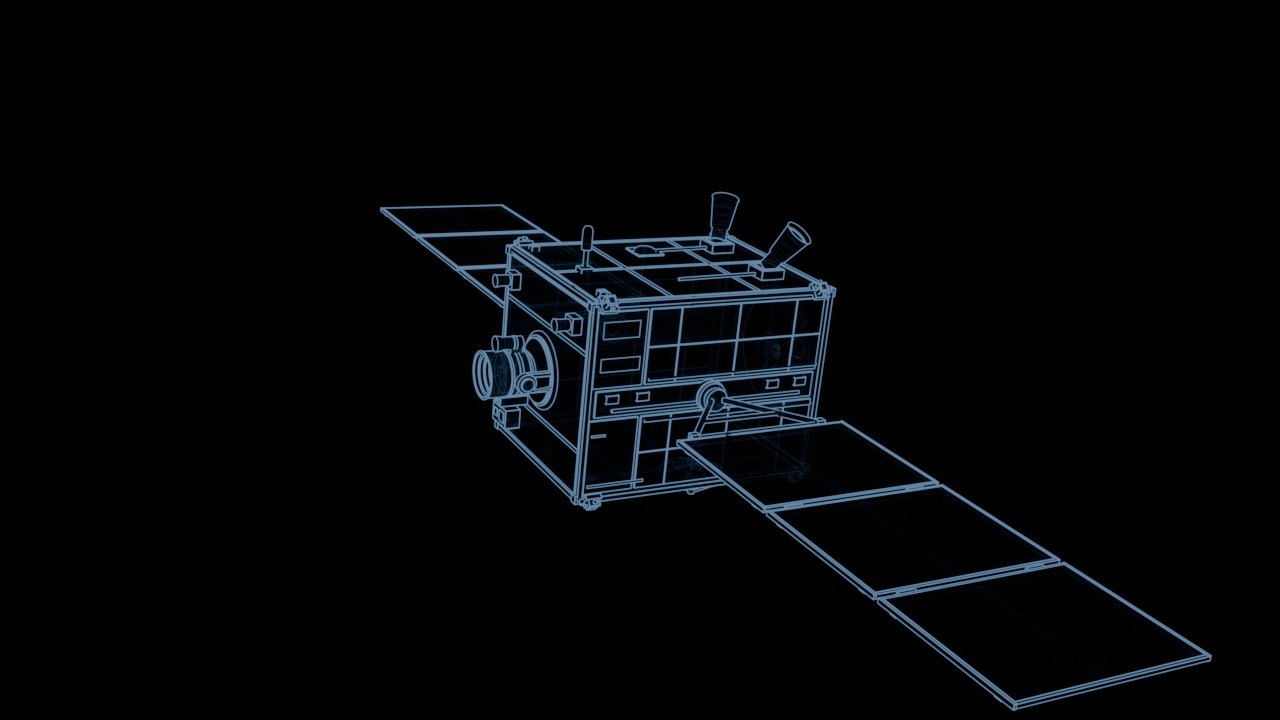
Over the Earth's blue limb, the inspector WATCHMAN-1 closes in, with the radar satellite ICEYE-X36 and Cosmos 2612 beyond it, all caught by a hard sun.
Alpha 0.5 · Free · Open-source engine

xGEO

Nothing hides in space

A hard-science simulation of satellites, sensors and signals in Earth orbit. Every orbit, signal and sighting is computed from published physics.

EnginexGEO Core · open sourceGamexGEO Live · in your browserPhysicsSourced and checkedScroll
02

Features

Computed, not scripted. Filmed in the game.

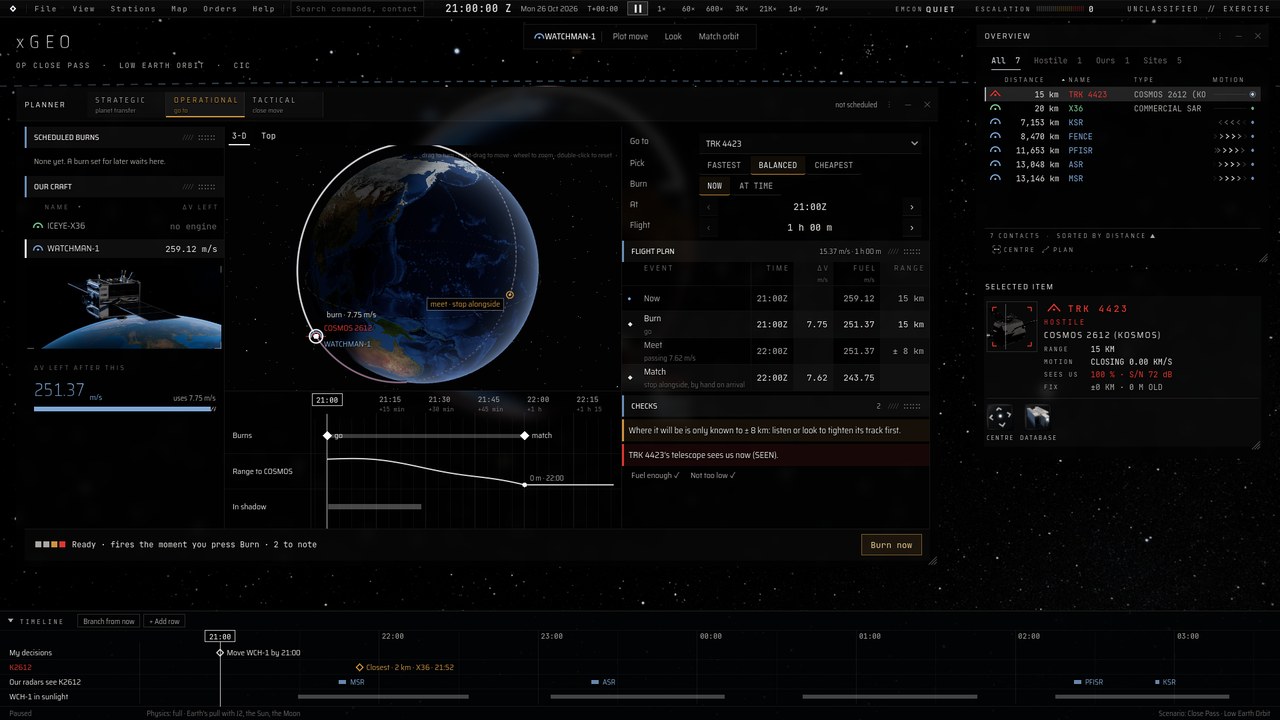
The planner over the Earth: WATCHMAN-1's transfer to Cosmos 2612, its burns, fuel and range, and the checks before it fires.
01

Real orbits

Every move is solved, not animated: Lambert's problem under the Earth's flattened gravity, the Sun and the Moon. The satellites start on their real orbits, and fuel trades against time.

Lambert transfers · J2, Sun and Moon · SGP4 from real element sets
02

Telescopes, sunlight and shadow

A telescope sees a satellite only by the sunlight it reflects or the heat it gives off, worked out as signal-to-noise for every look. In the Earth's shadow it sees nothing.

Planck's law in band · Real sunlight and shadow

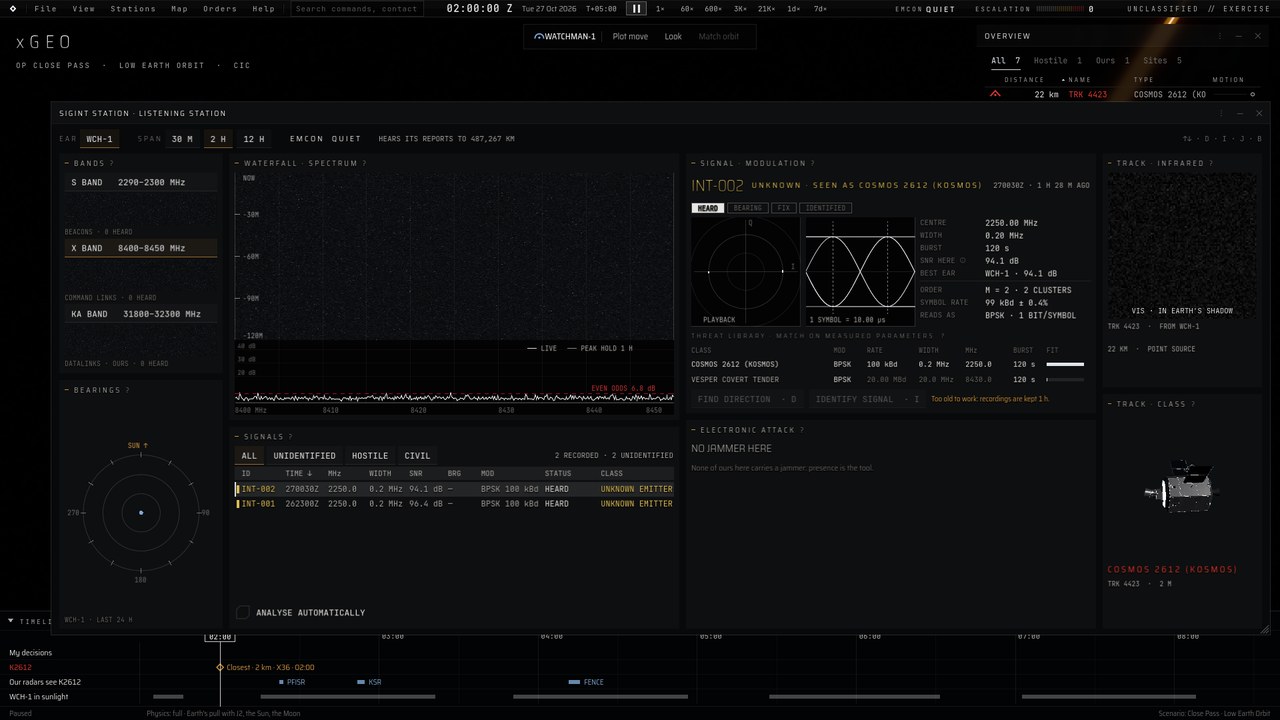
The SIGINT station: Cosmos 2612's reports to the ground picked out of the band and identified.
03

Signals intelligence

Hear the inspector's reports to its ground stations, fix them by direction finding, and identify each emitter by what its signal measures.

Friis link budgets · Direction finding · Modulation

04

Tracking, and presence

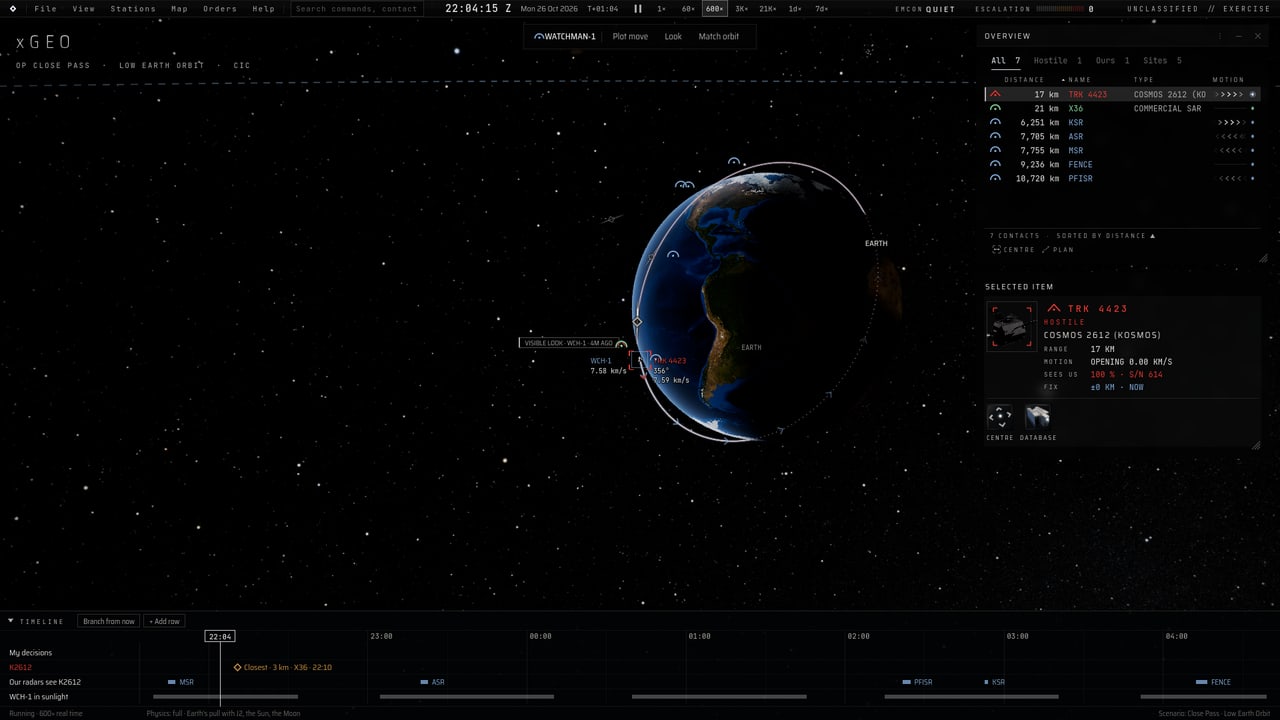
Real ground radars see the inspector only on their passes; your own telescope holds it in between. Every track carries its uncertainty. And you win by being there: park close and it gives way, push too hard and tension climbs.

Kalman tracking · Real radar sites · Escalation, not shooting

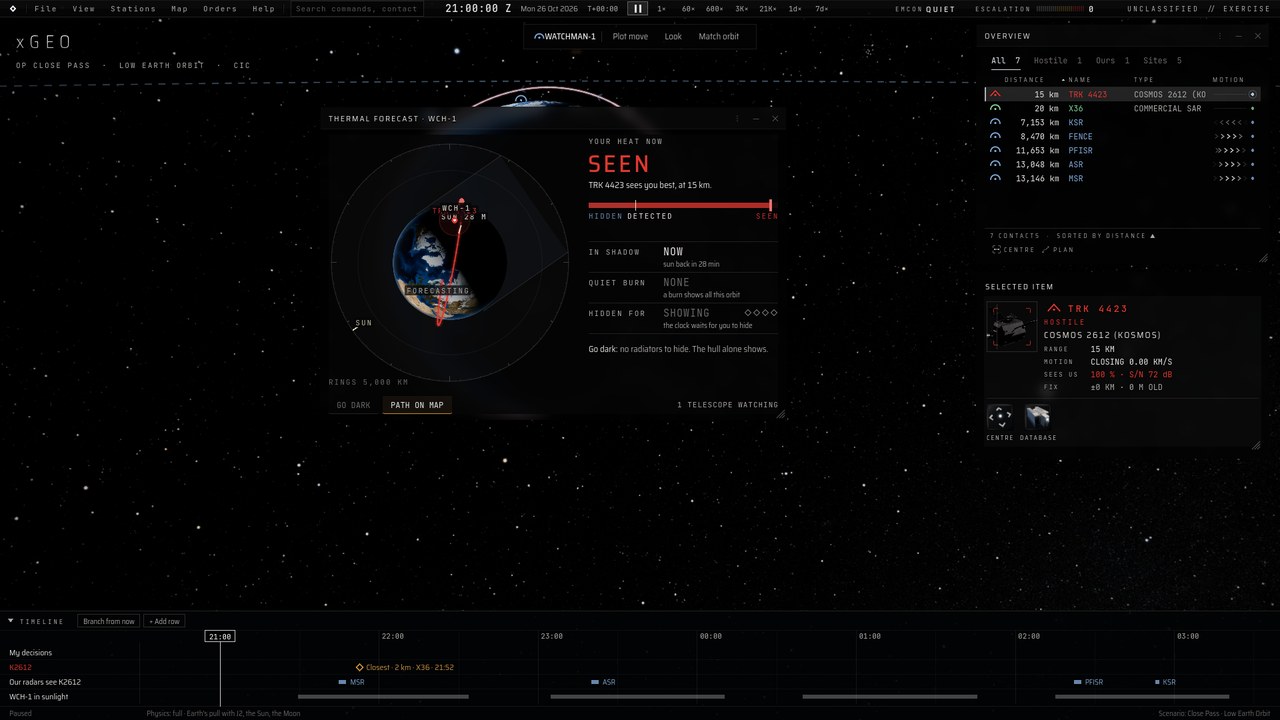
The forecast window over the Earth: when each sensor will see WATCHMAN-1 over the coming orbit, in sunlight and in the Earth's shadow.
05

Forecasts you can plan by

Before you move, see when you will be seen: every sensor's look at you over the coming orbit, in sunlight and in shadow.

Every sensor, every look, computed ahead

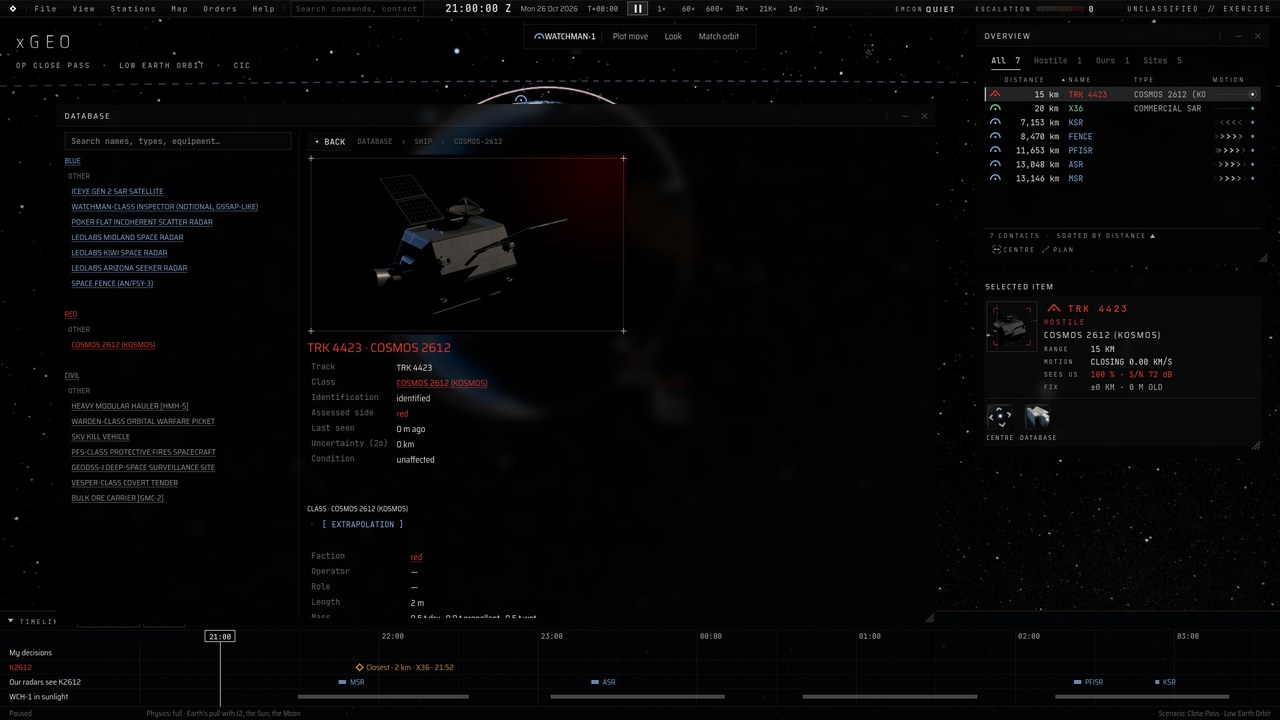
The platform database: Cosmos 2612, its registry, values and published sources.
06

Platforms and equipment, from specs

Each platform is built from its equipment: dish sizes, power, thrust. Performance is computed from them, and every value cites its source or says it is a design value. The satellites are real, with their public specs.

Specs in, performance out · Every number sourced

03

xGEO Core

The engine under the game. Free and open source.

A 24-hour xGEO Core run of Close Pass, plotted: with no orders given, Cosmos 2612 closes from 5 km behind ICEYE-X36 to within 490 m of it, while WATCHMAN-1 drifts further behind.1 KMCOSMOS 2612 · STARTCLOSEST 490 M · +10.3 HICEYE-X36 WATCHMAN-1 · 20 KM BEHIND, DRIFTING TO 41 KMDIRECTION OF FLIGHT →GRID 1 KM ALONG TRACK · 0.5 KM UP · 26–27 OCT 2026 · NO ORDERSA real 24-hour run of Close Pass, plotted from Core's own output: left alone, Cosmos 2612 comes within 490 m of ICEYE-X36
  1. Download1.6 MB. Needs Godot 4.7, free.
  2. RunOne command, JSON lines out.godot --headless --path core/godot --script res://cli/run.gd -- --scenario= --hours=24
  3. Make it yoursApache 2.0. Change your own copy; just don't call it xGEO.
04

Manuals

Read up before you launch.

Both print cleanly, or read them on screen.

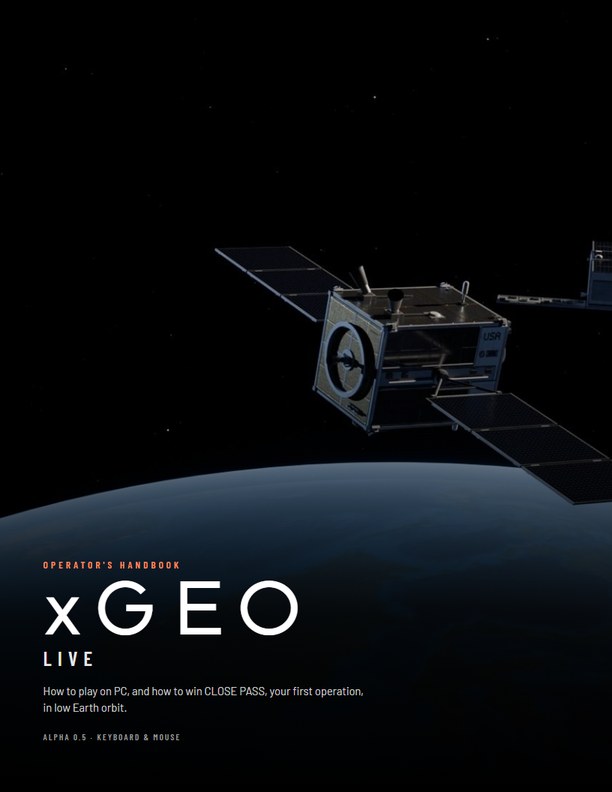
The cover of the Operator's Handbook: the inspector WATCHMAN-1 over the Earth's blue limb. For players

xGEO Live · Operator's Handbook

The platforms and equipment, the console, every control, and a walkthrough.

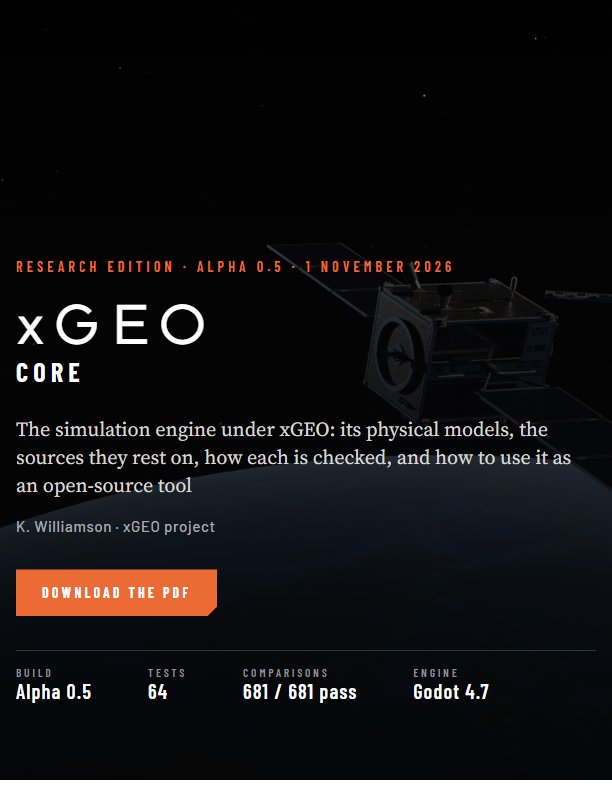
The first page of xGEO Core, the Research Edition. For the curious

xGEO Core · Research Edition

The engine under the game: every model, the sources it rests on, the checks that hold it to them, and how to use it as an open-source tool.

xGEO Live · Alpha 0.5

See what the physics says.

Free, no account, no install. Needs a desktop browser with WebGL 2, a keyboard and a mouse, and a 130 MB download on first load. Saves stay in your browser.